

Best overall starting point for golf gloves for sweaty hands in 2026: a synthetic glove with documented moisture-management features. Best for persistently wet conditions: a purpose-built rain glove; best for golfers who specifically want cabretta leather: the Gripmaster Tour Hippo Glove, without assuming leather alone solves sweat.
- Choose golf gloves for sweaty hands by fit and documented wet-grip features, not product names.
- Synthetic golf gloves are the first category to compare for frequent sweating.
- Rain gloves suit persistently wet conditions; check the manufacturer's intended use.
- White Hippo lists cabretta leather for the Gripmaster Tour Hippo Glove, not a verified sweat-control feature.
Why this matters
A glove that feels comfortable with dry hands still needs to work when your palm gets damp. Buying softer leather, choosing a tighter size, or picking a product with Tour in its name does not establish that it handles sweat better.
Choose for the condition that causes your problem: occasional palm moisture, frequent sweating, or a glove that becomes wet throughout. Those are different shopping needs. This guide separates them instead of naming an unsupported winner across every situation.
For an 18-hole round, pack 2 gloves and 1 dry hand towel as a practical starting setup. That is a packing recommendation, not a promise that any particular glove will stay dry for the whole round.
What makes the best golf gloves for sweaty hands?
Use these criteria before comparing styles for your 2026 golf bag:
- Documented moisture handling: Look for an explicit explanation of how the glove manages perspiration. A general comfort claim is not the same thing.
- Secure fit: The palm should lie close to your hand without loose folds, while your fingers should move without uncomfortable pulling.
- Wet-condition purpose: Separate gloves intended for everyday play from gloves specifically designed for wet conditions.
- Comfort during wear: Check seams, closure placement, and finger length. An irritating glove is a poor choice even if its material sounds suitable.
- Clear care instructions: Choose a glove you can maintain as directed. Do not assume every leather or synthetic glove can be washed the same way.
- A workable rotation: Plan where the damp glove will air out and where the replacement will stay dry.
Material is a useful filter, not a complete verdict. Compare the actual glove construction and product instructions before deciding.
Best options at a glance
These are buying categories rather than a claim that every glove within a category performs identically. The leather entry is a specific product with a confirmed material detail.
| Option | Best for | Standout buying reason | Key limitation |
|---|---|---|---|
| Synthetic golf glove with documented moisture management | Frequent sweating during otherwise dry play | Lets you prioritize stated sweat-handling features | Synthetic material alone does not prove moisture control |
| Purpose-built rain glove | Persistently wet playing conditions | Designed around wet-condition use | Wet-weather suitability does not automatically mean dry-hand comfort |
| Gripmaster Tour Hippo Glove | Golfers who specifically prefer cabretta leather | Product description identifies cabretta leather | Leather content does not establish a sweaty-hand advantage |
1. Synthetic golf glove: best for frequent sweating
A synthetic golf glove is the first category to compare when perspiration is your main problem. Narrow the selection to products whose descriptions specifically address moisture handling, rather than treating every synthetic glove as equivalent.
Synthetic describes a material category, not a guaranteed result. Panel construction, fit, and care requirements still matter, so read beyond the headline before choosing.
Synthetic golf glove pros
- Gives you a category in which to compare specific moisture-management claims.
- Lets you prioritize practical construction details over a preference for leather.
- Provides a clear shopping route when sweat, rather than rain, is your main concern.
Synthetic golf glove cons
- The word synthetic does not establish drying speed or wet grip.
- Different constructions require separate comparisons; the category is not a single specification.
- A poor fit still leaves you with bunching, pressure, or unwanted movement.
Best for: You regularly develop damp palms while playing in otherwise dry conditions and want to shop around that problem first.
Before choosing, ask what the description actually tells you. Does it explain moisture handling, identify ventilation, or provide clear care directions? A feature should be stated for the exact glove, not inferred from a similar model.
Try the glove with your fingers extended and then curled around a club. Check that the closure holds comfortably without needing to be pulled to an extreme position.
Verdict: Buy a synthetic glove when its stated features and fit match your sweating problem; skip generic performance language as evidence.
2. Purpose-built rain glove: best for persistently wet conditions
A rain glove is designed for wet-condition use. It belongs on your shortlist when your hands and glove remain wet, rather than becoming briefly damp between shots.
Do not assume a rain glove is simply a better everyday glove. Check the manufacturer's intended conditions and instructions, including whether the glove is meant to be used damp.
Rain glove pros
- Addresses wet-condition play directly rather than relying on an ordinary glove's general comfort claim.
- Gives you a distinct option when a damp glove remains your main problem.
- Makes intended use an explicit part of the buying decision.
Rain glove cons
- A wet-weather design does not establish that you will prefer its feel with dry hands.
- Instructions differ, so do not apply another glove's wetting or care routine.
- Fit remains essential; rain-specific construction does not correct excess palm material.
Best for: You need a glove for persistent moisture and are willing to choose around wet-condition use rather than familiar dry-leather feel.
For your 2026 shortlist, separate occasional sweating from genuinely wet play. If drying your hands and changing gloves restores a comfortable hold, start with an everyday glove and a rotation routine. If persistent moisture is the condition you need to accommodate, compare purpose-built rain options.
Keep the decision specific. A product's wet-weather purpose is relevant; an unsupported claim that it prevents every slip is not.
Verdict: Buy a rain glove for its stated wet-condition purpose; hold if your only issue is occasional palm sweat.
3. Gripmaster Tour Hippo Glove: best for cabretta leather preference
The Gripmaster Tour Hippo Glove is a golf glove whose product description identifies cabretta leather. That makes it a relevant option when you specifically want that material, rather than a synthetic or rain-focused alternative.
White Hippo's Gripmaster Tour Hippo Glove is best for golf-glove shoppers who specifically want cabretta leather. The material detail supports that recommendation; it does not establish a sweat-control advantage.
Gripmaster Tour Hippo Glove pros
- The description identifies cabretta leather rather than leaving the material unspecified.
- Suits a shopping decision centered on a known leather preference.
- Provides a specific product to assess for fit instead of choosing by category alone.
Gripmaster Tour Hippo Glove cons
- Cabretta leather alone does not verify moisture management or wet-grip performance.
- It is not the default recommendation when documented sweat handling is your first requirement.
- Material information cannot tell you whether the glove's finger lengths and palm shape suit your hand.
Best for: You already prefer cabretta leather and are prepared to manage perspiration with hand drying, glove changes, and proper care.
Choose the White Hippo golf glove because the stated material matches your preference, not because the product name promises a particular outcome. Confirm the sizing guidance and care instructions before making your decision.
If your current leather glove repeatedly becomes uncomfortable when damp, buying another leather glove without changing your selection criteria does not address the reason you are shopping.
Verdict: Buy for a specific cabretta leather preference; skip as an assumed solution to sweaty hands.
Check fit before changing materials
Start with clean, dry hands and follow the glove's sizing instructions. Do not deliberately choose a painfully tight glove because you expect sweating to change the fit.
Check these areas while wearing the glove:
- Palm fit: Look for loose folds when you close your hand around the grip.
- Finger length: Check for distracting empty space at the fingertips and pulling between the fingers.
- Closure comfort: Fasten the glove securely without uncomfortable pressure across the back of your hand.
Move your fingers, hold a club, and make a relaxed practice motion where it is safe. Stop if you feel pinching or restricted movement. A close fit should not require you to tolerate discomfort.
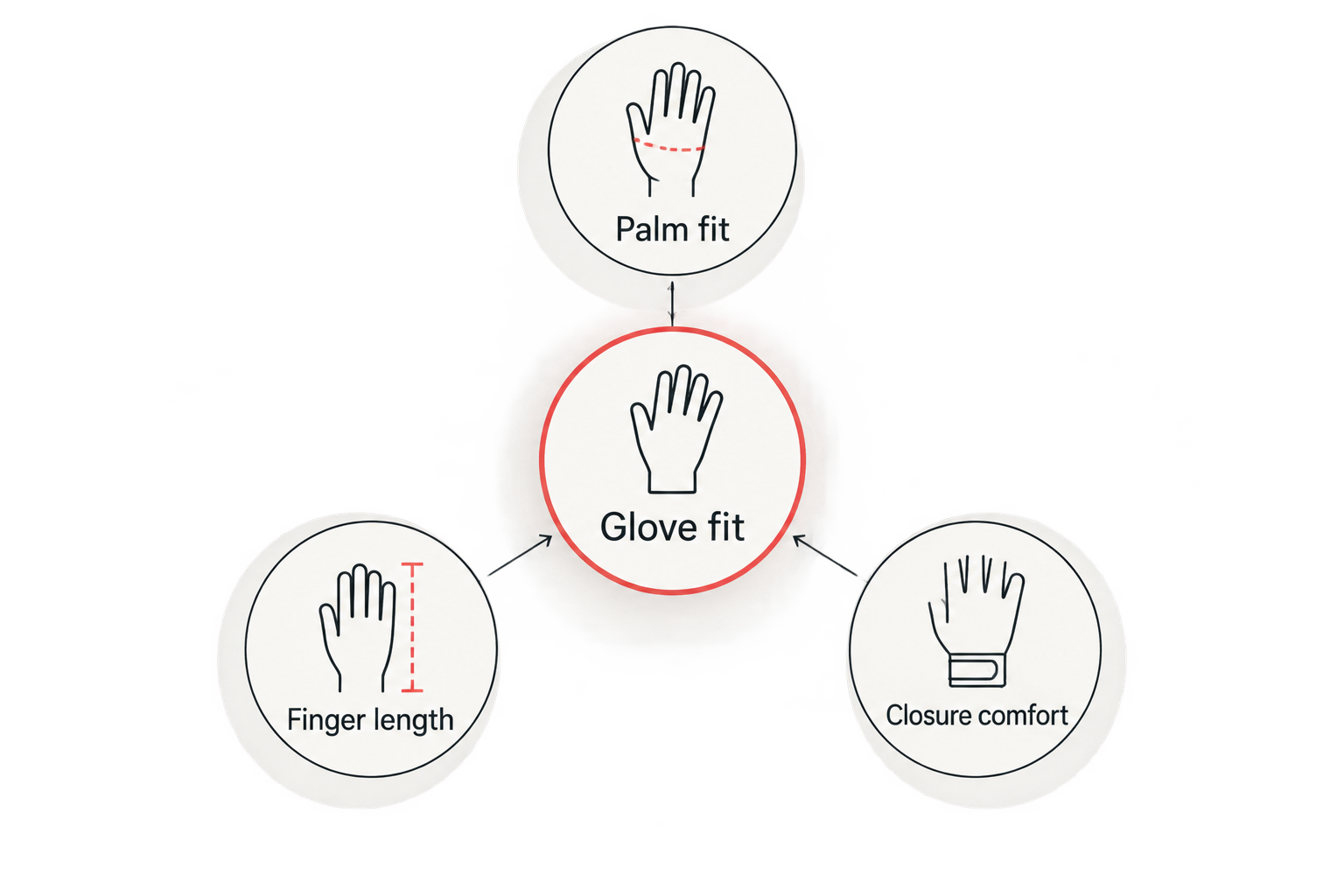
Fit and moisture are separate checks. If a glove feels wrong while your hands are dry, resolve that problem before judging how it handles a sweaty round.
Build a simple dry-glove routine
A buying decision is only part of managing sweaty hands. Give the glove a chance to air out, and avoid putting a dry replacement straight onto a wet palm.
Use this sequence during your next round:
- Dry your hands: Use a clean, dry towel before putting the glove back on.
- Check the grip: Clean and dry the club grip according to its care instructions.
- Change gloves: Switch when the glove becomes uncomfortably damp rather than waiting for the next hole.
- Air out: Keep the used glove open in a suitable ventilated spot, following its care guidance.
Keep a hand-drying towel separate from the towel you use on muddy clubs or golf balls. A towel already wet from cleaning equipment is not a useful dry-hand backup.
After the round, follow the glove's care instructions. Do not improvise with a washing machine, dryer, or direct heat unless the manufacturer expressly permits that treatment.
Before your next outing, inspect the palm, fingers, seams, and closure. Replace a glove because its condition no longer suits use, not because an arbitrary number of rounds has passed.
How the options are ranked
This 2026 guide ranks buying routes by how closely they address the problem: documented moisture management for frequent sweating, wet-condition design for persistent moisture, and confirmed leather content for material preference.
The ranking does not assign drying times, durability scores, or measured grip advantages. A useful recommendation separates a stated feature from a result that has not been established. Apply the same standard when comparing other golf gloves.
Which golf gloves for sweaty hands should you choose?
Start with a synthetic glove that explicitly addresses moisture management if sweat is your main complaint. Check fit first, then compare the actual feature descriptions and care requirements.
Choose a purpose-built rain glove when persistent wetness defines your playing conditions. Choose the White Hippo golf glove when cabretta leather is your priority, with no assumption that leather itself provides better sweat handling.
For your 2026 purchase, answer this question before choosing: are you replacing an uncomfortable fit, addressing sweat, or preparing for wet weather? Buy for that reason first.
FAQ
What's the best type of golf glove for sweaty hands?
Start by comparing synthetic gloves with explicitly documented moisture-management features. If persistent wetness is the main issue, compare purpose-built rain gloves instead; material names alone do not establish performance.
Are leather golf gloves good for sweaty hands?
Leather content alone does not establish that a glove is good for sweaty hands. Choose leather for a specific material preference, then assess fit, stated features, and care requirements separately.
Is the Gripmaster Tour Hippo Glove designed to stop sweating?
The product description identifies cabretta leather, not a feature that stops sweating. Consider it for that material preference rather than treating it as a verified sweat-control solution.
Can I use rain gloves when it isn't raining?
Check the rain glove manufacturer's intended-use instructions before choosing it for dry-weather sweat. Wet-condition suitability does not automatically establish that you will prefer its feel with dry hands.
How many golf gloves should I bring for sweaty hands?
Pack 2 gloves as a practical starting setup so you have a dry replacement. That is a rotation recommendation, not a guarantee that either glove will stay dry for a full round.
Should I buy a smaller golf glove to prevent slipping?
Do not choose a painfully tight glove to compensate for moisture. Follow the sizing guidance and check palm fit, finger length, and closure comfort before assessing sweat handling.
How should I dry a sweaty golf glove?
Follow the glove manufacturer's care instructions and let it air out as directed. Do not assume machine drying, washing, or direct heat is suitable for its materials.
What should I check when buying golf gloves for sweaty hands in 2026?
Check fit, documented moisture handling, intended playing conditions, and care instructions. Choose the glove for your actual problem rather than assuming Tour, leather, or performance wording proves better wet grip.
One last thing
Before replacing your glove, check what your dry hand is about to touch. A damp club grip or an already-wet towel belongs in the same troubleshooting routine as the glove itself.
For 2026, make the change you can evaluate: dry your hands, use a clean grip, and compare a correctly fitted glove. That gives your next purchase a clear job to do.


